


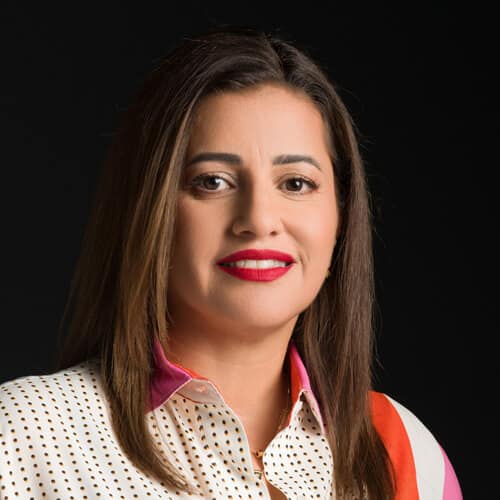
My interest in STEM started through systems and real-world complexity—watching how technology, data, and infrastructure shape people’s opportunities. Over the years, working in large-scale, “industrial” environments made me see that performance isn’t only about tools—it’s about how humans and systems interact. That’s exactly what led me to my PhD: using AI and data to make inequality patterns in STEM ecosystems visible, measurable, and interpretable—so we can design fairer pathways, not just talk about them.
Your organization´s key sector and mission:
I am the Founder & Managing Partner of HUMAN+, a future-driven consulting ecosystem that helps organizations grow by putting people at the center — without losing performance, structure, or ambition. We design practical, modern people and culture solutions — HR strategy, leadership & learning, sustainability/ESG integration, and EU-funded project support — so organizations can move forward with clarity, trust, and measurable impact.
Please tell us briefly about your role in the company/organization:
As Founder & Managing Partner, I lead HUMAN+ projects that connect strategy with real-life execution: organizational design, people architecture, capability models, performance and workforce systems, and leadership alignment. I work closely with leaders during growth or transformation, bringing a hands-on consulting approach enriched by my PhD research at the intersection of Human Capital, Artificial Intelligence, and STEM ecosystems in Widening Centres of Excellence, with a particular focus on future-ready organizations, skills, and inclusive innovation.
Your interest in STEM
My first role models were my parents—my father and my mother. They were the ones who convinced me that whatever I choose, I will always find a way to make it work. That belief became a foundation I still carry: courage first, then strategy.
Today I’m inspired by women who combine technical depth with courage and responsibility — the ones who don’t just succeed personally, but reshape the field by raising standards around ethics, inclusion, and real impact. And I’m especially inspired by women who manage to let their life and personality lead their work, not the other way around—because that is the kind of success that lasts.
Your studies
Strengths: My biggest strength has always been self-confidence — supported by my family’s deep belief that I can achieve anything I choose, no matter what. That belief gave me resilience and the courage to keep going.
Challenges: Time and energy management was a real challenge, especially during my HR postgraduate studies and now as I started my PhD, while carrying strong family responsibilities as a wife and a mother.
Opportunities: Each stage of study opened new doors, especially the chance to connect people strategy with future-focused themes like technology, AI, and fairness in STEM ecosystems.
Threats: Social stereotypes can be powerful — especially in Greece, where women often carry a larger share of caregiving and are subtly pushed to reduce ambition over time. I also entered HR at a time when modern HR culture in Greece was still underdeveloped, so I often had to build credibility from scratch.
Choose a field that excites your curiosity, then build two things in parallel: strong fundamentals (data, logic, problem-solving) and confidence through practice (projects, internships, communities). Don’t wait until you feel “ready”—readiness grows through doing. And find at least one mentor or supportive community early; it changes everything.
You at work
In HUMAN+, DEIS is a delivery principle, not a side project: we design fair systems (role clarity, transparent criteria, inclusive feedback cultures) and build capability so inclusion becomes everyday behavior. In parallel, I’ve supported DEIS learning initiatives at scale — helping organizations translate inclusion into practical routines, language, and leadership habits that actually stick.
I’m most proud that I never traded quality for convenience — even in environments that were highly standardized, “sterile,” and full of stereotypes. I consistently brought my own creative, human-centered perspective into large-scale systems (learning ecosystems, capability models, workforce frameworks), and it proved valuable: it strengthened results, elevated culture, and created benefits beyond work — touching the people around me, from teams and clients to my own personal ecosystem.
I often like to reverse the question: women can empower technology — not the other way around. The more women enter STEM and tech-driven fields, the more technology will evolve in a healthier, more complete way—because technology reflects the people who design it.
When more women are present, we gain more diversity in how problems are understood and solved. Many women bring strengths that are critical for modern technology: human-centered thinking, fairness awareness, systems thinking, and strong collaboration and communication skills that help technology serve real lives, not just systems. When these strengths enter tech, the result is better products, better decisions, and more responsible innovation.
Your point of view
Go for what you want, fully and unapologetically. Build your skills, ask questions, and claim your space early. But most importantly: protect your strength and your will.
Obstacles will appear — sometimes subtle, sometimes direct. Don’t let them become a reason to shrink your ambition. Use them as feedback, not as a verdict. Find allies and mentors, keep evidence of your progress, and keep moving — one step at a time. Persistence is not just a trait; it’s a strategy!
By 2030, I would like DEIS to move from “nice statements” to real culture and measurable progress. In the HUMAN+ mindset, the goal is not only inclusion—it is brave, human-centered progress.
I want to see more women who are bold: women who act on what they believe in, who lead with both creativity and structure, and who influence decisions — not from the margins, but from the center. At the same time, organizations must build the conditions that make this possible: transparent opportunities and fair criteria, psychological safety, accountability, and systems that support real life — not only “ideal workers”.
To finish with
My values are rooted in HUMAN+: human-centered progress, integrity in partnership, and co-creation for impact. I care about trust, clarity, and meaningful outcomes — work that is both structured and alive, and that moves people and organizations forward without losing their humanity.
My next challenge is to scale impact without losing depth: to grow HUMAN+ as an ecosystem of high-quality work, while staying creative, current, and honest to my standards. In parallel, I want to complete my PhD and keep bridging research and practice—so the insights around fairness, AI, STEM ecosystems, and Smart Cities become tools that organizations can actually use.
By 2030, I want my career to be defined by evolution, not repetition. I am driven by introspection, creativity, and continuous learning — and I want to keep working on things that feel fresh, relevant, and meaningful. Whether through HUMAN+ or my PhD journey, my direction stays the same: staying up to date, exploring new ideas, and turning them into practical value for people and organizations. This is not only a 2030 goal — it is how I plan to move forward long-term.